
At Solvoyo, it’s not just projects and technology solutions that take shape, inspiring career journeys do, too. In this post, we take a closer look at our teammate Yeşim’s professional growth, how she balances motherhood and career, and the space Solvoyo has created for her along the way. Through Yeşim’s experience, we explore how women can thrive both professionally and personally when the right culture and environment of trust are in place.
How did you cope with the common social prejudice that “motherhood and career cannot go hand in hand”? Did working in the field of technology add any pros or cons to this?
Unfortunately, in the early stages of my career, I encountered prejudiced managerial comments such as, “You won’t be able to focus enough on work when you become a mother,” or “It’s very difficult to advance in your career while making time for a child.” These approaches showed me very clearly that the problem does not stem from the coexistence of motherhood and career, but from the system itself.
In my opinion, the real issue is creating the conditions that allow well-educated, well-equipped women to take more active roles in business, especially in management levels. We experience this firsthand at Solvoyo. We have a work culture where working mothers are understood and supported, and thanks to the hybrid and remote working model, we can manage our agendas flexibly in line with our projects. This serves as proof that the judgment “motherhood and career do not go together” is completely invalid when the right systems are established.
Working in the field of technology has definitely made a positive contribution for me. By closely following innovations and integrating them into my work, I can work more efficiently and effectively. Additionally, since our work involves constantly monitoring developments in our field and checking their results, it keeps the mind and knowledge fresh. This has also had a beautiful reflection on my personal life; my son, who has been observing me for about 4.5 years, became interested in the field of software and has started producing his own small projects by taking age-appropriate training today. From this perspective, technology has played a transformative role in both my career and my parenting journey.
How has the work arrangement at Solvoyo opened up space for you in terms of balancing motherhood and career?
The work arrangement at Solvoyo has opened up a space that makes the balance between motherhood and career sustainable. Thanks to the hybrid working model, there is a flexibility where I can both focus on my work and plan my day without neglecting my responsibilities as a mother in case of emergencies. Here, flexibility is not limited to “where you work from”; since it is a result-oriented approach, how you manage your time is also left to you.
I think this culture makes a huge difference, especially for working parents. Being able to rearrange my agenda without feeling guilty in the face of my child’s school schedule, needs, or unexpected situations also increases my commitment to my work. When you work in an environment where you feel safe and know you are supported, you become both more productive and more motivated.
In summary, the work arrangement at Solvoyo has clearly shown me this: when the right environment of flexibility and trust is provided, you don’t have to choose between motherhood and career; both can grow stronger together.
In terms of corporate culture, could you share a moment with us where you said, “I felt understood and supported”?
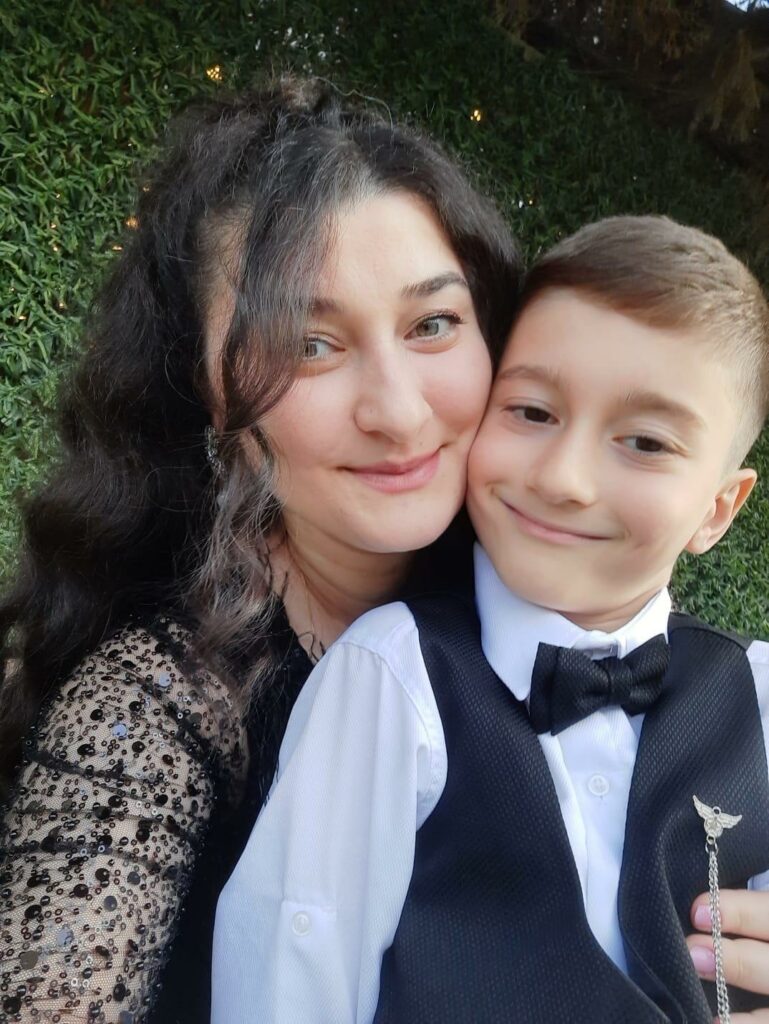
Of course, moments like gifts being sent to our children on our national holidays or back-to-school gifts with special notes when they start school are quite impressive in terms of this aspect of the corporate culture. However, to get more specific, one of the most striking moments when I felt truly understood and supported in terms of corporate culture was the period when my son, Ata, had a serious accident. It was a very challenging process for a parent, as we had to stay in the hospital with a suspected skull fracture and brain hemorrhage.
During this period, my teammates and managers at Solvoyo cared for Ata as if he were their own child. Their constant calls, check-ins, and moral support were very precious to me. Even more importantly, no responsibility on the business side was made to feel like a burden to me, and the message “health comes first” was clearly conveyed.
In that process, I felt this very clearly: I was seen not just as an employee, but as a human being. This approach made me feel deeply that corporate culture is not just on paper, but is truly lived during difficult times.
Is providing equal opportunity for women only possible through HR policies? Or is it through culture? Where do you think Solvoyo stands in this regard?
Providing equal opportunity for women is not an issue that can be achieved solely through HR policies. Of course, written policies, processes, and frameworks are very important; however, if these are not reflected in behaviors in daily life, they have no real equivalent. The real deciding factor is how much these policies are intertwined with the corporate culture.
I think that at Solvoyo, this issue is handled not just as an “HR item,” but as a natural way of working and a perspective. It is at a point where it can keep equal opportunity alive not in rhetoric, but in daily business practices and decision-making processes. The fact that the rate of female employees in my department is 39% and that 30% of our company’s management team is female also supports this information.
What would you say in one sentence to working women who will step into management today?
As Mustafa Kemal Atatürk said: “Everything in the world is the work of women.” I wish all my sisters who will step into management to move forward with courage, carrying the belief and responsibility that this word holds. May all beauties find you!
Do you think equality in working life is hidden only in numbers, or in daily practices? Where have you felt this difference most in your own experience?
Although it is a strong indicator and result, equality in working life is not a subject that can be measured only by numbers in my opinion. Real equality, as I mentioned, emerges in daily practices and decision-making processes. Who is listened to at the meeting table, who is trusted in critical projects, and to whom leadership roles are opened are much more decisive.
In my own experience, I feel this difference most in moments where we can have an equal say as women both in projects and at the management level. Evaluating my ideas independently of my gender or parenting role, and trusting me and my other female colleagues in taking responsibility and initiative is the indicator of true equality.
This approach ensures that women are not just “represented,” but are truly a part of the process. Thus, equality gains meaning in a working environment where competencies are visible and there is equal access to decision-making mechanisms, rather than just figures.
As a manager with your own team, what kind of management style do you adopt to break some cycles that are different from the management style you have seen/experienced? What do you do?
As a manager, I consciously try to stay away from the more micro-control-oriented management approaches that allow very little room for error, which I have experienced in the past. What is important to me is not just directing the team, but opening up a space where they are trusted, where they can develop and take initiative, and where they can become managers in the future.
For this reason, the management style I adopt is based on a very positive, disciplined, and supportive approach. I give my teammates clear responsibilities, set goals together, and follow the process closely. When necessary, we intervene and guide by critiquing together.
At the same time, I care deeply about the continuous development of my team. In order not to be limited only to the requirements of the current job, I regularly share information and documents from different sectors and different disciplines that I think will add value to our work. In this way, an environment is created that keeps the sense of curiosity alive and encourages learning within the team.
In my opinion, strong teams are formed in environments where people are not afraid to make mistakes, are not on edge with a culture of fear, can express their ideas freely, where psychological safety is felt, where they know they are valued, and where the continuity of development is believed in. As a manager, I strive to break this cycle and implement a more trust-based, growth-oriented understanding of leadership.