
Maintaining optimal stock levels is a complex challenge in the ever-evolving grocery retail landscape, especially concerning perishable goods. Grocery retailers must strike a delicate balance between meeting customer demand and avoiding excess inventory, all while managing the unique challenges of fresh produce, dairy, and meat products.
For grocery retailers, effective replenishment strategies must account for the seasonal nature of produce, optimizing inventory based on fluctuating availability and demand throughout the year. Moreover, shelf-life management is crucial to minimizing waste and maintaining product freshness, requiring systems and processes to track expiration dates and prioritize the sale of older stock.
In this blog, we explore the intricacies of replenishment in grocery retail, the specific hurdles these retailers face with perishables and seasonal goods, and AI-powered solutions to these challenges that can significantly improve inventory management and reduce shrinkage.
Perishables replenishment works when store orders follow store-level demand and the stock that is still sellable. Forecast each SKU and store from sales history, weather, promotions and local events. Estimate waste so projected inventory is accurate. Then automate daily store orders and warehouse or cross-dock allocation around expiration dates, seasonal availability, pack sizes and delivery schedules.
Fresh Store Ordering vs. Central Replenishment
Fresh store ordering means each store writes its own daily order for produce, dairy, bakery and meat, usually from a shelf walk and the manager’s judgement. Central replenishment means one planning team or system calculates every store’s order, plus the DC or cross-dock allocation, from shared data: store-level forecasts, sellable stock, shelf life, pack sizes and delivery schedules. For perishables, central replenishment is usually the stronger model once it works at SKU and store level and refreshes daily: it sees demand and stock across the whole network and can send a short or late delivery to the stores where it will sell. Stores still matter for what the data misses, such as damaged stock, a local event or a display change, so their job shifts from writing orders to correcting exceptions.
| Factor | Fresh store ordering | Central replenishment |
|---|---|---|
| Who decides | Store manager or department lead | Central planners or an automated planning system |
| What the order is based on | Shelf check, recent sales, experience | SKU and store forecasts, sellable stock, shelf life, promotions, weather, delivery days |
| Where it works well | Small networks, local specialties, sudden local changes | Many stores, short shelf lives, shared DC or cross-dock stock |
| Typical weak spot | Inconsistent orders between stores, bias toward overstock, time on the shop floor | Blind to in-store conditions unless stores can flag them |
Mopas, a grocery retailer with 121 stores and one DC, used to replenish its stores by hand from store orders. Once Solvoyo’s demand-driven planning produced the store replenishment decisions instead, lost sales fell 58%, and users accepted 93% of those decisions (user acceptance rate). At İstegelsin, a Turkish online grocer with 23 dark stores, fresh produce is allocated centrally from a cross-dock as each truck arrives, using the quantities actually received, live stock and shelf life. Within one year of go-live, fresh product availability rose from 72% to 86% across the fresh categories run through the cross-dock engine (about 25% of the product scope by revenue), with no increase in the waste ratio.
For replenishment methods, reorder formulas and stockout prevention beyond fresh categories, see our inventory replenishment guide.
Challenges in Perishables Replenishment Planning
With 1.6 billion tonnes of food wasted annually, one major challenge in grocery replenishment is managing perishable goods. Unlike non-perishable items, fresh produce, dairy, and meat products have limited shelf lives, requiring more frequent and precise replenishment cycles to maintain freshness and minimize waste.
Seasonal produce management adds another layer of complexity. Grocers must adapt to fluctuating availability and demand for fruits and vegetables throughout the year, balancing local and imported produce to meet customer needs while managing costs.
Predicting demand accurately can be difficult due to weather, promotional impacts, or sudden shifts in consumer preferences, which can all unpredictably impact buying behavior and potentially lead to food waste.

Managing thousands of products across a vast multi-echelon network of suppliers, distribution centers, and cross-dock locations serving stores with different formats and customer profiles adds another layer of complexity to replenishment management. Each item has its demand pattern, making maintaining optimal inventory levels for each product in every location challenging.
Operational constraints also complicate replenishment planning. Factors such as store capacity, shelf-display requirements, delivery schedules, and pack sizes must be considered, adding to the complexity of maintaining the correct inventory levels.
How AI Is Enhancing the Perishable Replenishment Process
1. Improving Demand Forecasting Accuracy at the Store Level
AI’s ability to analyze vast amounts of data from multiple sources–including historical sales, market trends, weather conditions, and even local events enables retailers to forecast demand at the store level more accurately. This is particularly valuable for managing perishables and seasonal produce
2. Improving Inventory Accuracy
One of the fundamental challenges of managing perishable inventory optimally is the uncertainty around the amount of sellable inventory available at the store. Due to factors such as temperature and humidity conditions, handling and storage, and the fragile nature of certain fruits and vegetables, certain portions of the stock end up in unsellable condition and must be written off by the store associates. Now, AI models can learn from the waste patterns of each type of product at each store and estimate the likely levels of waste in the future. This helps bring more precision and accuracy to projected inventory levels over the future planning period and enables better decision-making for store replenishment orders.
3. Automating Replenishment Decisions
AI-driven systems can automate the daily store replenishment orders and warehouse/cross-dock allocation decisions, considering factors like expiration dates, seasonal availability, and the likelihood of waste. By continuously learning from real-time data, these systems can dynamically update optimal inventory levels and recommend or execute replenishment orders without human intervention. This ensures that fresh products are always available while minimizing excess stock, leading to waste.
AI Applications You Can Use Today
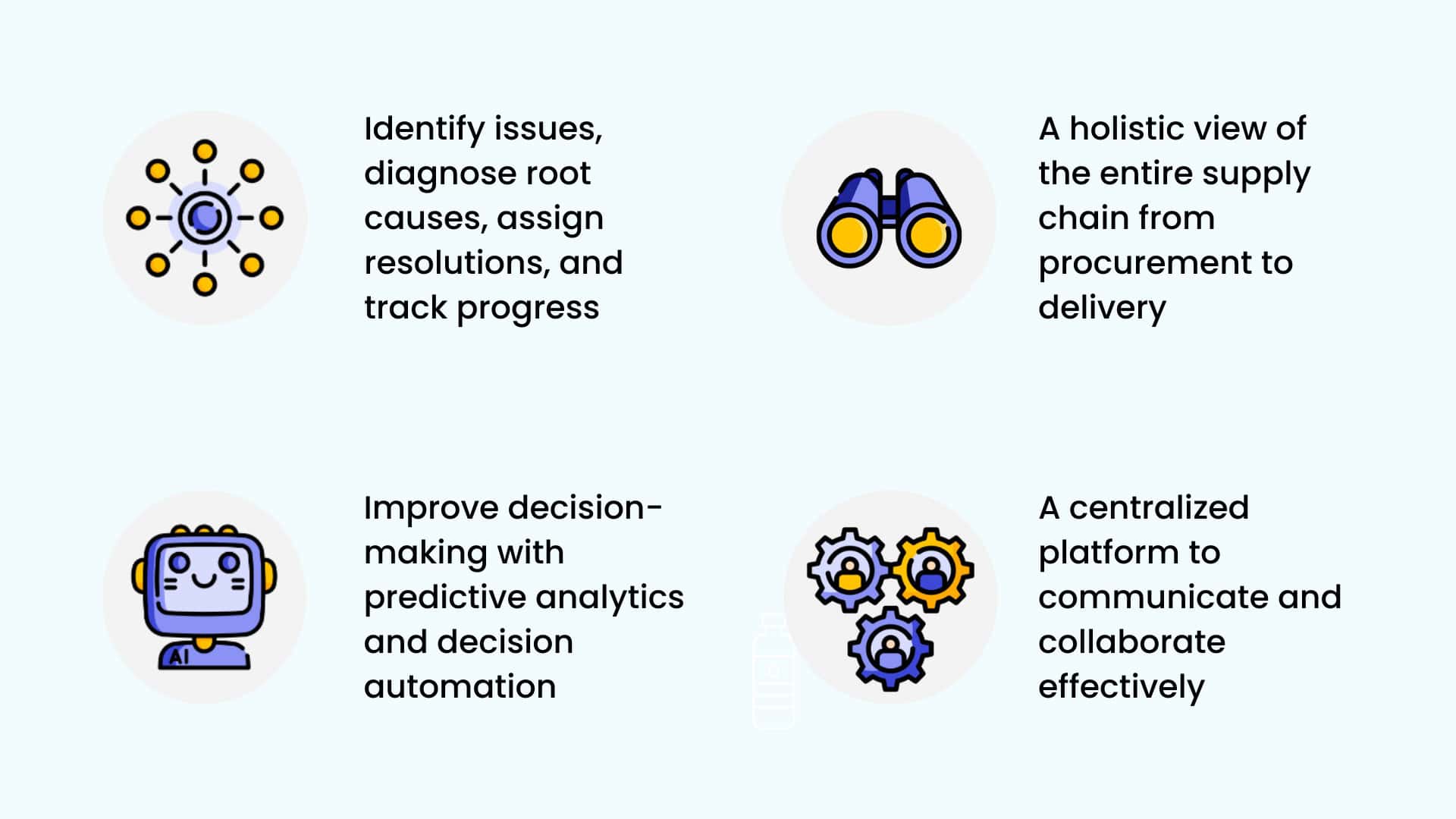
AI is changing grocery retail replenishment through various interconnected applications. These solutions work together to create a comprehensive approach to inventory management, particularly for perishable goods. Here’s how AI is enhancing different aspects of the replenishment process:
Store Clustering and Micro-Segmentation
AI algorithms can analyze vast amounts of data to create highly granular store clusters based on numerous factors such as sales patterns, customer demographics, local competition, and even weather patterns. This micro-segmentation allows for more precise initial allocation tailored to each store’s unique characteristics, improving the accuracy of inventory distribution for new products.
Cannibalization and Halo Effect Prediction
Advanced AI models can predict how introducing a new seasonal product will affect sales of existing items in the same or related categories. By analyzing historical data of similar product lifecycles and considering factors like price points, packaging, and positioning, these models can forecast both cannibalization (where the new product takes sales from existing ones) and halo effects (boosting sales of complementary products). This insight allows for more strategic initial allocation decisions considering each store’s entire product ecosystem.
Demand-Driven Replenishment with AI/ML for Perishables
Cutting-edge replenishment solutions use AI and ML models to predict demand with higher accuracy, which is especially crucial for perishable goods. These models analyze various demand drivers, including seasonality, promotions, and weather conditions, to set dynamic inventory targets that closely align with consumer needs while considering product shelf life.
Check out how AI is making demand planning more accurate.
Seasonal Produce Management
Advanced AI solutions can adapt to the cyclical nature of produce availability, helping grocers plan for seasonal transitions. They can predict demand for the lifecycle of seasonal fruits and vegetables based on historical data, pricing and promotions, weather forecasts, and market trends, ensuring optimal stock levels throughout the year.
Granular Forecasting and Optimization for Fresh and Packaged Goods
AI-powered replenishment solutions offer detailed SKU and store-level forecasts, allowing grocers to optimize inventory for each location based on its unique demand profile and product mix. This tailored approach improves inventory productivity by aligning stock levels more closely with actual demand, reducing excess stock and stockouts while maintaining product freshness.
Waste Analytics to Improve Inventory Accuracy
Accurate inventory data is one of the challenges in optimizing inventory levels for fresh vegetables and fruits. Since waste is higher in these categories, having accurate inventory projections for the future days and weeks is not always easy. AI models can be used to estimate waste trends at the product and store levels, which can improve replenishment decisions.
Prescriptive Analytics with Perishables-Specific Constraints
Optimization models provide optimal and actionable replenishment and allocation recommendations considering grocery-specific constraints like cold chain requirements, produce seasonality, and varying shelf lives. These solutions help grocers minimize food waste and maximize profitability by balancing inventory holding costs and service levels for perishable and non-perishable items.
A Grocery Retail Success Story: Solvoyo’s AI-Powered Replenishment in Action
To illustrate the impact of advanced, AI-powered replenishment solutions in grocery retail, consider A101, the sixth fastest-growing retailer in the world based in Turkey. Facing challenges with manual data entry, empirically based purchase orders, and difficulties adapting to supply changes, A101 implemented Solvoyo’s Retail Planning Suite, an AI-powered platform running on AWS. The results were remarkable:
- 50% reduction in stockouts across 12,000+ stores
- 20% share in total revenue for promotional items, with a 98% acceptance rate for AI-generated recommendations
Solvoyo’s end-to-end replenishment solution, powered by AI and advanced analytics, enabled A101 to overcome complex challenges in grocery retail, particularly in managing perishables and promotional items. Read the full story here.
Embracing AI-Powered Replenishment for Competitive Advantage in Grocery Retail
In the highly competitive grocery retail landscape, efficient replenishment planning is critical for maintaining product freshness, reducing waste, and driving revenue growth. Advanced, AI-powered replenishment solutions offer a robust approach to managing the complex process of grocery inventory, especially for perishables and promotional items, through demand-driven models, automation, and prescriptive analytics.
As grocery retail continues to evolve, adopting advanced planning solutions that harness the power of AI will be vital in staying ahead of the curve and meeting consumers’ ever-changing needs. By embracing AI, grocery retailers can position themselves for success in the dynamic world of retail replenishment, ensuring optimal stock levels, reducing waste, and improving customer satisfaction.

Frequently Asked Questions
Fresh store ordering means each store writes its own daily order for produce, dairy, bakery and meat, usually from a shelf check and the manager’s judgement. Central replenishment means one planning team or system calculates every store’s order and the DC or cross-dock allocation from store-level forecasts, sellable stock, shelf life and delivery schedules. For perishables, central replenishment is usually stronger at scale, with stores flagging what the data misses. Solvoyo generates store and DC orders from live demand signals, upcoming promotions and shelf-life constraints.
Replenishment platforms that use AI and ML forecasting link the two. They forecast at SKU and store level and set dynamic inventory targets from seasonality, promotions and weather, with shelf life taken into account. The stronger ones also estimate waste by product and store, so projected stock reflects what can be sold. Solvoyo predicts true sellable inventory at the store-item level and places store and DC orders automatically.
Grocers should weigh shelf life, store-level demand, expected waste and operational constraints. Produce, dairy and meat need frequent, precise replenishment cycles. Demand moves with weather, promotions and seasonality, and recorded stock overstates what is sellable once spoiled items are written off. Store capacity, shelf-display requirements, delivery schedules and pack sizes also limit the right level for each item in each store.