Transform Your Supply Chain: Strategic Network Design for Competitive Advantage
Whether it’s a production-distribution or supply-delivery network, your infrastructure must move in lockstep with your strategy. Solvoyo meets that challenge with a high-fidelity digital twin of your supply chain, advanced optimization technology, and a scalable scenario evaluation platform.
 4-18%
4-18%
 4-18%
4-18%Total Cost to Serve Reduction
 88-93%
 88-93%
Emissions Reduction

Don’t take our word for it
“By rationalizing our North American network, we provided improved service at lower costs through redesigning our network. Our project succeeded in shifting our “inventory-centric” perspective to one of “total-cost optimization.” We have since consolidated our depots in North America, leading to significant infrastructure cost savings as well as a sustained inventory reduction of $5 Million.”
-

Solvoyo Was Featured in Forbes for Decision Automation Capabilities
Read more ->: Solvoyo Was Featured in Forbes for Decision Automation CapabilitiesSolvoyo has been recognized in Forbes for its advancements in autonomous supply chain planning. In the article, Chief Innovation Officer…
-

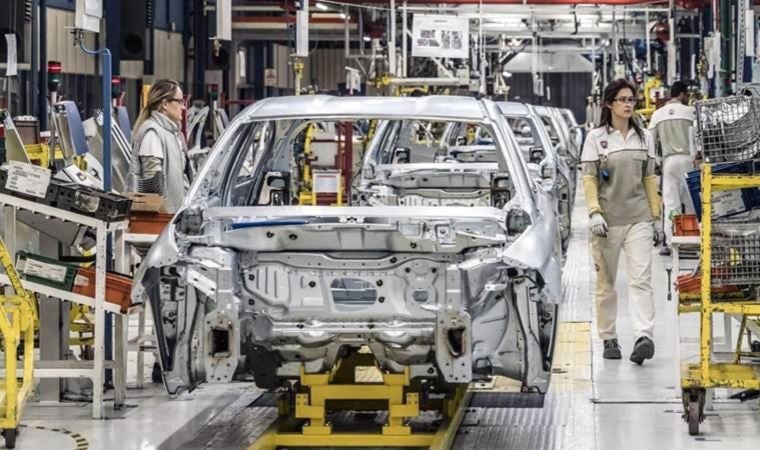
Solvoyo’s Customer, a Global Automotive Manufacturer, Reduces CO2 Emissions by 88-93%
Read more ->: Solvoyo’s Customer, a Global Automotive Manufacturer, Reduces CO2 Emissions by 88-93%Per $1 billion in company revenues, no supply chain application has a better return on investment (ROI) than network design!…
-

Last-mile Delivery Infrastructure and Tactics
Read more ->: Last-mile Delivery Infrastructure and TacticsGlobal Automotive ManufacturerThe automative manufacturer used an analytics platform to optimize last-mile delivery infrastructure and tactics.


Solvoyo Platform

Your Supply Chain, Performing at Its Peak

30-40%
Avg trip distance reduction

8-18%
Inventory reduction

8-12x
Faster planning

95%+
Decision automation on daily operational planning
Unlock Precision in Network Design
Quantitative Network Model
Build a high-fidelity digital twin of your supply chain network — modeling every node, flow path, cost structure, and capacity constraint quantitatively to align infrastructure decisions with current business strategy and customer service requirements. Determine the optimal number of facilities, their locations relative to customer demand, and their capacity sizing — replacing intuition-based infrastructure decisions with a Total Cost to Serve optimization that accounts for the full cost of every network configuration before a single investment is made.
Scenario & What-If
Test footprint changes, sourcing alternatives, flow-path redesigns, and outsourcing options side by side before committing capital — with a scenario evaluation platform that processes multiple network configurations simultaneously and ranks them against competing objectives including cost minimization, service level maximization, and carbon footprint reduction. Evaluate the downstream consequences of opening or closing a DC, shifting production between facilities, changing transportation modes, or entering a new market — so infrastructure decisions are stress-tested against demand volatility, supply disruptions, and strategic growth scenarios rather than optimized against a single baseline that may not reflect future operating conditions.
Total Cost-to-Serve Optimization
Optimize the entire network against a Total Cost to Serve model that balances service levels, inventory investment, transportation costs, warehousing costs, and production economics simultaneously — rather than minimizing cost in one dimension while inadvertently inflating it in another. Define optimization objectives flexibly — Maximize Profit, Minimize Total Cost, Maximize Service, or a combination using Goal Programming — so the network design reflects the strategic priorities of the business rather than a generic cost reduction mandate that ignores service and margin trade-offs. Profitable outsourcing scenarios for warehousing, fulfillment, distribution, and transportation are evaluated within the same model, giving leadership teams a quantitative basis for make-versus-buy decisions across the supply chain.
Carbon Footprint & Sustainability Trade-offs
Quantify the carbon footprint consequences of every network configuration — across supply, production, transportation, and warehousing operations — using built-in carbon footprint calculators that create a baseline and evaluate the cost versus emissions trade-off for every scenario. As sustainability regulations tighten and customers increasingly differentiate on environmental performance, network design decisions that ignore carbon consequences create both regulatory and commercial risk. Solvoyo lets supply chain and sustainability teams evaluate the optimal balance between carbon emission minimization and cost efficiency within the same optimization model — so infrastructure decisions serve both the P&L and the ESG agenda simultaneously.
Solvi — From Strategy to Execution
Solvi, Solvoyo’s AI planning agent, continuously monitors network performance against the strategic design — detecting when cost-to-serve, service levels, or carbon footprint drift from the model’s projections and triggering scenario comparisons so supply chain strategy stays aligned with business reality between formal network reviews.
Solvoyo Differentiators

Autonomous Decision Making
Executes high-quality supply chain decisions with little to no planner intervention.

95%+ User Acceptance
Drives recommendations planners trust enough to accept and execute at scale.

Optimization + AI + Heuristics
Combines mathematical rigor and machine intelligence to outperform rule-based planning.

Real-World Constraint Modeling
Builds real-world operational constraints directly into every decision the system makes.

Network Wide Objective Solving
Optimizes cost, service, inventory, and feasibility across the full supply chain at once.

Unified Data and Execution
Connects data, planning, diagnostics, and action in one system built for execution.
Start your journey now
Begin the comprehensive digital transformation of your business with Solvoyo’s end-to-end intelligent platform.


Frequently Asked Questions
Strategic network design is a quantitative supply chain model that aligns supply chain infrastructure — production-distribution networks, supplier networks, and service-delivery networks — with customer requirements and business strategy, optimizing the infrastructure based on Total Cost to Serve. Companies should revisit their network design whenever a structural change makes the current configuration suboptimal: entering a new market, acquiring a competitor, losing a major DC lease, absorbing a significant volume shift, responding to new tariffs or trade regulations, or when cost and service performance have been degrading despite operational improvements — signaling that the problem is structural rather than operational.
Transportation cost is one component of Total Cost to Serve — the others include facility fixed and variable costs, inventory carrying cost at each network node, handling cost, production cost by location, and the cost of lost sales when service level targets are not met. Minimizing transportation cost in isolation produces network configurations that reduce freight spend while simultaneously increasing warehouse costs, inflating inventory investment, and degrading service levels in ways that more than offset the transportation savings. Solvoyo’s Total Cost to Serve model optimizes across all cost dimensions simultaneously — producing network configurations where every infrastructure decision accounts for the full cost consequences before a single investment is made.
A supply chain digital twin is a quantitative model that encodes every node, flow path, cost structure, and capacity constraint in your network — replicating the physical supply chain in a mathematical environment where structural changes can be evaluated, costed, and compared before any capital is committed in the real world. Solvoyo builds the digital twin from your actual demand data, facility cost structures, transportation rates, and service level requirements — then runs optimization and scenario analysis against it at a speed and scale that spreadsheet-based network modeling cannot match, enabling 15 to 20 scenario comparisons in the time a manual analysis would produce one.
Solvoyo’s network design solution allows companies to run unlimited number of scenarios — evaluating DC-store mappings, facility configurations, and location options against Total Cost to Serve simultaneously, with new store demand estimates and location-based map visualization available within the same solution. Each scenario encodes a different strategic hypothesis — a new DC location, a consolidation of existing facilities, a change in sourcing geography, or a response to a tariff change — and produces a complete cost and service output that leadership can compare side by side before authorizing any capital investment or lease commitment.
Supply chain decisions have a direct effect on carbon footprint across supply, production, transportation, and warehousing operations. Solvoyo builds a digital twin of the supply chain and processes known carbon footprint calculators to create a baseline, then evaluates the trade-offs between minimal carbon emission and minimal cost options — quantifying the carbon cost of each network configuration alongside its financial cost. This allows leadership to make sustainability decisions on measurable trade-offs rather than qualitative commitments: understanding exactly how much additional transportation cost each incremental reduction in carbon emissions requires, and which network configurations deliver the best balance between cost efficiency and environmental performance.