Align, Sense, and Shape Your Way to Better Accuracy
Solvoyo’s AI-powered demand planning platform empowers every stakeholder, from sales teams to the C-suite, with a single source of truth that combines internal data with external demand drivers to generate forecasts that are accurate, actionable, and always current.
 8-12x
8-12x
 8-12x
8-12xFaster planning
 420-2000 bps
 420-2000 bps
Forecast accuracy improvement

Don’t take our word for it
“Demand planning is both art and science. Until we collaborated with Solvoyo, we managed our demand planning process as a form of art, relying only on individual intuition backed up by the primitive science of spreadsheets. Now, we are finally in a position to make real-time decisions fed by all sorts of data.”
“With a network of 9800 stores, supply chain disruptions and uncertainty are normal for us, we keep opening hundreds of new stores and multiple DCs every year. With advanced analytics and automation, we planned for this level of complexity way ahead of our competitors.”
“80% of IT tools investment fails if the partners don’t strive to continuously improve and adapt. That is what sets our partnership with Solvoyo apart.”
“With Solvoyo, we eliminated spreadsheets from the process and simultaneously increased process speed and planner efficiency across all regions.”
“Solvoyo is not just a great platform to support your replenishment process. It is also a great team to support you with insights and guidance on the road to improved efficiency. A true partnership.”
“Solvoyo has been a very effective solution partner in our fast growth and digital transformation journey. Using Solvoyo’s platform for fashion planning solutions, we were able to bring automation to buy planning and size optimization decisions.”
“When I write or speak about supply chain management, I always state that the purpose of a supply chain is to do one thing – enable growth. I believe Solvoyo is the optimal supply chain platform to help companies achieve the growth they desire.”
-

End-to-End Autonomous Planning & Analytics
Read more ->: End-to-End Autonomous Planning & AnalyticsUnilever – Fortune 100 Global CPGManaging all their supply chain planning data on a single platform, they achieved real-time visibility…
-

Global S&OP Reconciliation
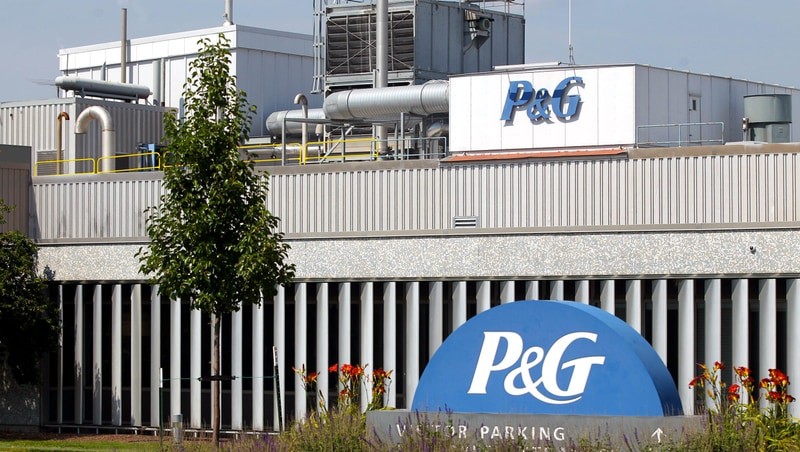
Read more ->: Global S&OP ReconciliationP&G – Fortune 100 Global CPGThe Global CPG company uses a single digital platform to maintain global demand, inventory and…
-

Digital Transformation for Forecasting, Inventory Optimization and Procurement
Read more ->: Digital Transformation for Forecasting, Inventory Optimization and ProcurementHepsiburada – E-Commerce RetailerHepsiburada automated their approach to detect slow moving inventory and optimize price actions to meet budget targets


Solvoyo Platform

Your Supply Chain, Performing at Its Peak

8-18%
Inventory reduction

8-12x
Faster daily/weekly planning (predictability)

600-800 bps
Service uplift

95%+
Decision Automation on daily operational planning
Master Your Demand Signal
AI-Powered Forecast Generation
Combine historical sales, inventory, and fulfillment records, point-of-sale data, distributor sell-through, weather forecasts, financial targets, and social sentiment into a single forecasting engine that automatically runs a tournament of 20+ statistical and machine learning methods and selects the best-fit model per SKU, channel, and location. New products, store openings, and range transitions are handled through cognitive learning that transfers patterns from analogous items, bootstrapping a reliable forecast from day one without waiting for history that does not yet exist.
Lost Sales Correction
Estimate the lost sales behind every out-of-stock by reading historical sales against store-level inventory at the SKU-store-day level, then feed that recovered demand back into the forecast — breaking the stock-out-to-under-forecast cycle that quietly erodes availability and leaves recoverable revenue on the table.
Demand Collaboration
Encode commercial intelligence — promotional plans, pricing actions, new product launch timing, and key account commitments — directly into the demand plan alongside the statistical baseline on a single platform. Sales, marketing, finance, and operations each contribute within a structured workflow that prevents version conflicts and identifies disagreements between functional forecasts before they propagate into supply plans. The result is a consensus demand plan that the entire organization has shaped, owns, and acts from — rather than a number one function created and another ignored.
Demand Sensing
Short-term demand signals — including POS data, weather, web analytics, social media activity, and promotional calendars — are read continuously and used to automatically adjust the near-term plan before deviations materialize into stockouts or excess inventory. Planners act on what is happening now, not on what the last weekly batch run predicted.
Scenario-Based Planning
Evaluate the demand and revenue consequences of price adjustments, promotional investments, marketing activities, product portfolio changes, competitor moves, and macroeconomic shifts by running what-if scenarios against the approved base plan in seconds. Create, store, recall, and compare multiple scenarios side by side — quantifying the inventory, service, and financial impact of each path before the decision is made. Authorize the preferred scenario directly into the planning process without rebuilding the forecast in a separate tool or distributing updated numbers to downstream teams manually.
Demand Shaping
Measure the demand elasticity of every lever available to the commercial team — promotional depth, website placement, pricing relative to the competitive index — at the SKU and category level, so demand-shaping decisions are grounded in measured responsiveness rather than intuition. When a category tracks below its revenue target, prescriptive gap closure recommendations identify the combination of pricing, promotional, and inventory actions most likely to close it — routed to the right planner or category manager with full supporting analytics already attached.
Solvi — From Insights to Actions
Solvi, Solvoyo’s AI planning agent, continuously monitors demand signals across every SKU, store, and channel — detecting early demand shifts and forecast deviations, diagnosing their root cause, and generating prioritized forecast-adjustment recommendations planners can action directly within the platform.
Solvoyo Differentiators

Autonomous Decision Making
Executes high-quality supply chain decisions with little to no planner intervention.

95%+ User Acceptance
Drives recommendations planners trust enough to accept and execute at scale.

Optimization + AI + Heuristics
Combines mathematical rigor and machine intelligence to outperform rule-based planning.

Real-World Constraint Modeling
Builds real-world operational constraints directly into every decision the system makes.

Network Wide Objective Solving
Optimizes cost, service, inventory, and feasibility across the full supply chain at once.

Unified Data and Execution
Connects data, planning, diagnostics, and action in one system built for execution.
Start your journey now
Begin the comprehensive digital transformation of your business with Solvoyo’s end-to-end intelligent platform.


Frequently Asked Questions
An AI-powered demand planning platform ingests every available signal that influences what customers will buy — historical sales, inventory and fulfillment records, point-of-sale data, distributor data, promotional calendars, weather forecasts, competitor pricing, web traffic, and social media spend — and runs them through a tournament of 20+ statistical and machine learning forecasting methods simultaneously to select the model that best fits each SKU, channel, and location. The output is not a static weekly forecast that planners manually distribute to downstream teams; it is a live, continuously recalibrated demand signal that feeds directly into supply planning, inventory optimization, production scheduling, financial budgeting, and S&OP without re-entry or format conversion.
Solvoyo provides a single platform where each function contributes to a shared demand plan without the version control problem that makes spreadsheet-based collaboration unworkable. Sales inputs promotional plans and key account commitments. Finance inputs budget targets and revenue constraints. Marketing inputs campaign timing and expected lift factors. Operations inputs capacity constraints that bound the achievable plan. Each contribution is managed through a structured workflow with approval routing and conflict detection — so disagreements between functional forecasts surface as a planning discussion rather than as an unplanned supply shortage or inventory write-off after the fact.
Demand shaping and demand forecasting address the same question from opposite directions. Forecasting asks: given what we plan to do commercially, what demand will result? Demand shaping asks: given the gap we need to close, which commercial actions — pricing, promotion, placement, portfolio — will most efficiently close it? Solvoyo connects both by quantifying demand elasticity at the SKU and category level, using that model both to improve forecast accuracy through more precise promotional lift modeling, and to generate prescriptive gap closure recommendations when a category is tracking below its revenue target.
For new products, Solvoyo’s AI builds the forecast from analog items and product attributes rather than waiting for sales to accumulate. Attribute-based machine learning models and like-item modeling predict the launch curve from comparable products, and foundation models generate a forecast with zero history at all. As real sales arrive, the forecast self-corrects — so new and short-lifecycle items are planned accurately from day one.
Solvoyo applies machine learning models matched to each forecasting problem — gradient-boosted trees (LightGBM, XGBoost) on engineered demand features, deep learning models (Temporal Fusion Transformer, DeepAR) for complex patterns, and foundation models for items with little history. Every model is validated against a simple statistical baseline it must beat, so the method chosen per SKU is the one proven most accurate, not the most complex.
Solvoyo’s AI detects out-of-stock and low-availability periods and corrects the demand history for them — unconstraining suppressed sales back to true demand before the model trains on it. Without this step, a stockout teaches the model that demand fell, so it under-orders the same item again. By zeroing out censored periods and imputing real demand, the forecast reflects what customers wanted, not what the empty shelf allowed.
Accuracy and bias are tracked continuously with metrics like WMAPE, MAPE, and forecast bias, for system generated forecast as well as for user overrides. The platform also measures Forecast Value Add to detect areas where user overrides are improving the forecast accuracy. This means forecast quality is monitored, not assumed, and underperforming models are caught and replaced automatically.