

A supply chain planning implementation takes a planning system from signed contract to live decisions in five steps: discovery, data integration, configuration, acceptance testing with planner training, and go-live. With Solvoyo, that path typically takes about 12 weeks, and customers see measurable business results within three to four months. How long it takes for you depends less on the software than on scope, data readiness and how quickly the business agrees on what a good plan looks like.
The Phases of a Supply Chain Planning Implementation
The phases overlap. Data work starts in the first week, while discovery is still running, so problems in the source systems surface early instead of during testing. The timeline below is the one Solvoyo publishes for a typical project.
| Phase | Weeks | What it produces |
|---|---|---|
| Discovery and conceptual design | 1-3 | Interviews with subject matter experts, a refined scope and a signed conceptual design that maps the network, planning workflows and KPI definitions |
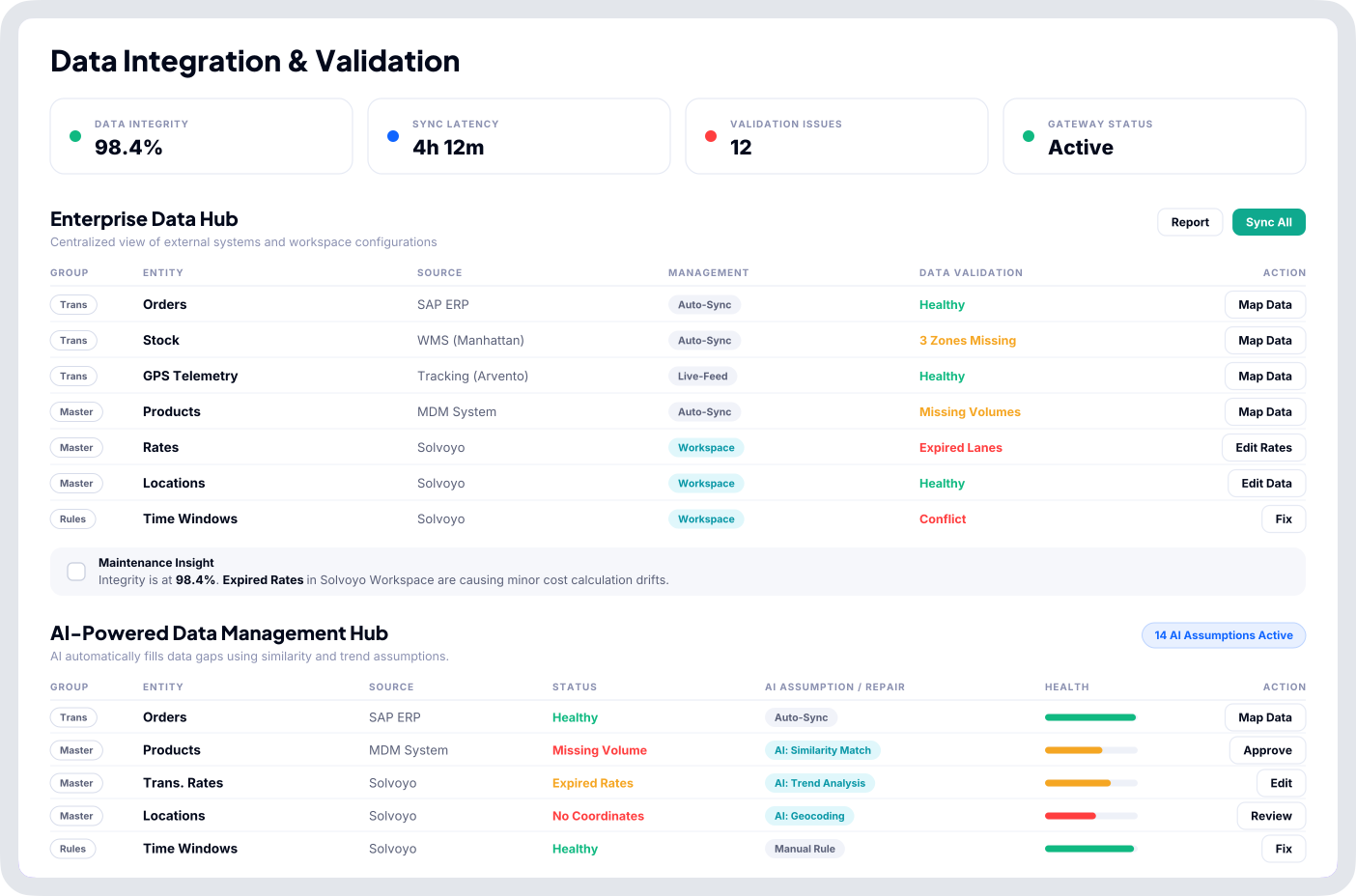
| Data integration and validation | 1-9 | Automated pipelines from ERP, WMS and POS into one data model, checked for completeness, consistency and grain |
| Model and UI configuration | 1-9 | Business rules, exception thresholds, screens and KPI reports set up the way the business plans |
| UAT and planner training | 10-12 | Models run on live data in parallel with the current process; planners train and sign off in structured acceptance testing |
| Go-live | About 12 | Live decision support: planners review and approve each recommendation |
Acceptance testing decides whether the project goes live. Expert users check that recommendations are accurate, explainable and in line with how the business operates.
Timeline: What Fits in 12 Weeks and What Takes Longer
Twelve weeks is realistic when the first phase covers one planning function, such as store replenishment or production planning, for a defined set of categories or sites. Further functions and regions are added after go-live, each with its own shorter cycle. Switching on every module at once makes the first phase much longer, because every function adds data feeds, rules and testers.
Other things that stretch a project:
- Many source systems with no common item or location codes.
- KPI definitions that are still being argued about at the UAT stage.
- Requests for custom code where configuration would do.
- Decision makers who are not available for the design and acceptance sign-offs.
Expect the first weeks after go-live to change how planners work before they change stock levels or lost sales. Our post on supply chain planning software ROI covers how to set the baseline for that comparison before go-live.
The Data You Need, and the Data You Don’t
A planning model needs three kinds of data:
- Master data: items, locations, suppliers, lead times, minimum order quantities, pack sizes, shelf life and sourcing rules.
- Transactions: sales or shipment history, inventory positions, open purchase and production orders.
- Constraints: warehouse, production and transport capacities, and any service or budget targets.
Integration is set up in three steps: map your data to the planning model, agree push or pull and the timing with your IT team, and finalize documented endpoints. Solvoyo connects to SAP natively through RFC, and to other systems through REST or SOAP web services, direct database transfer, files or middleware such as Dell Boomi and MuleSoft. Plans are written back, so the ERP stays the system of record. The options are listed on the Integration and APIs page.
You do not need years of data cleanup before you start. Automated data diagnostics flag gaps and inconsistencies at ingestion, such as a missing shelf life or a lead time that no longer matches what suppliers deliver. Each flag still needs an owner on your side who decides the correct value.
Who Needs to Be Involved in an Implementation?
- Executive sponsor: owns the KPI targets, chairs the steering committee and settles scope disputes.
- Planners and subject matter experts: describe how decisions are made today during discovery, then test the recommendations in UAT. Their time is heaviest in those two phases.
- IT and data owners: give access to source systems, agree integration schedules and security requirements, and fix data at the source.
- Vendor team: at Solvoyo, the same Customer Success team that runs onboarding stays through hypercare, so the people who configured the models are the ones who tune them.
What Are the Main Implementation Risks?
- Late data surprises. Validate completeness and grain at each integration point before any planning model runs.
- Scope creep. Sign the conceptual design and move new requests to the next phase.
- Recommendations planners do not trust. Run the models in parallel with the current process, and log a reason code for every edit so the team can see whether the planner knew something the model did not.
- Disputed results. Agree KPI formulas during discovery, not after go-live.
- Adoption that fades. Track acceptance rate and workflow usage after go-live, and act when either drops.
After Go-Live: Hypercare and Continuous Improvement
At go-live, planners still approve every recommendation. A feedback loop starts at the same time, feeding realized outcomes back into the models. Solvoyo’s Customer Success team then runs six months of hypercare: tracking the business KPIs and user acceptance, coaching planners, and checking input data quality. When acceptance dips, the team adds the missing logic in 3 to 6 week sprints.
As confidence grows, routine decisions move to no-touch automation and planners manage exceptions. The hypercare post describes this period in detail.
How Solvoyo Approaches Implementation
Solvoyo builds supply chain decision automation. Its optimization engine weighs cost, service, capacity and lead time in a single solve, so recommendations already follow the rules, thresholds and KPI definitions signed off in discovery and UAT. That is why over 95% of plans execute untouched, a rate Solvoyo sustains across enterprise clients and tracks with each customer as a shared KPI.
The Customer Journey page sets out each phase and week. To see what the timeline would look like for your own network and data, request a demo.
Frequently Asked Questions
It depends on scope and data readiness. Solvoyo configures the platform to a production-ready state in about 12 weeks, covering discovery, data integration, configuration and acceptance testing, and customers typically see measurable business results within three to four months. Starting with one planning function and adding others after go-live keeps the first phase on that schedule.
You need master data (items, locations, suppliers, lead times, order quantities, pack sizes, shelf life), transaction data (sales or shipment history, inventory positions, open orders) and constraints such as warehouse, production and transport capacity. Automated data diagnostics flag gaps at ingestion, so a full cleanup is not required before the project starts.
Planners review and approve recommendations while a feedback loop feeds results back into the models. At Solvoyo, the onboarding team stays for six months of hypercare, tracking KPIs and user acceptance and adding new logic in 3 to 6 week sprints. Routine decisions then move to no-touch automation, and planners handle exceptions.