
What Is Hypercare and Why It Matters in Implementation?
Hypercare is the period of close support right after a new system goes live, when the team that implemented it stays on to fix issues, coach users and check the agreed results. In supply chain planning, it covers KPI and user adoption tracking, planner coaching and data governance until the new way of planning becomes routine.
Implementing a supply chain planning (SCP) solution is only the beginning of the transformation journey—true value comes from sustained adoption and continuous improvement. The Hypercare phase of the implementation process ensures that organizations don’t just go live—they stay successful. Rooted in industry best practices, Hypercare is a post-go-live period that’s focused on structured support, continuous improvement, and active user engagement.
More than just the technical assistance and system maintenance, this phase includes ongoing training and advisory services to help teams navigate change, build internal capabilities, and achieve early wins. According to Gartner, this kind of structured post-implementation support is essential for ensuring adoption and long-term success—especially for midmarket enterprises that may lack deep internal resources.
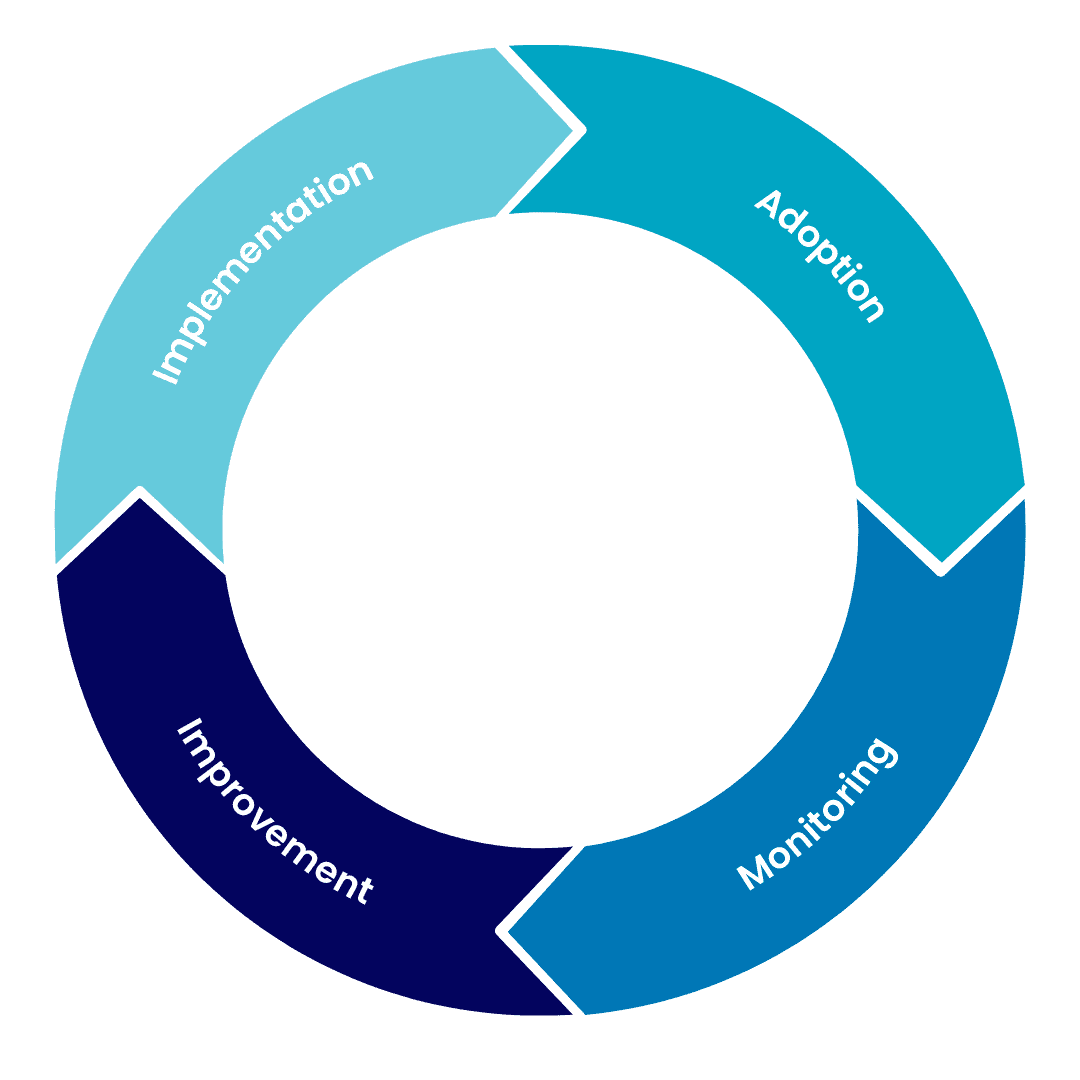
Hypercare is designed to help companies fully leverage their planning tools. By aligning business processes, technology, and data governance in a framework that evolves with your organization, teams are empowered to unlock the full value of their investment.
The Hypercare Phase: What Happens and How Long It Lasts
At Solvoyo, the Hypercare phase starts at go-live and lasts six months. Go-live itself takes 12 weeks: discovery and design, data integration and configuration in weeks 1 to 9, then user acceptance testing, planner training and sign-off in weeks 10 to 12. Measurable results follow in 3 to 4 months.
During those six months:
- The Customer Success engineers who onboarded the team monitor forecast accuracy, business KPIs and data health.
- They track user adoption, including the user acceptance rate of recommendations and the reason codes behind overrides.
- They stay in the work until planners accept over 95% of recommendations and the platform delivers results.
After Hypercare, new business logic, constraints and workflows ship in 3 to 6 week sprints. The Customer Success page shows the full timeline.
Why Post-Implementation Support Is Critical
A common misconception is that success is defined by go-live. In reality, it’s only the starting point. According to a 2023 Gartner survey, nearly half of companies had to attempt SCP implementations more than once, and just 40% of planners had successfully migrated to new tools. These numbers highlight a disconnect between implementation and actual adoption. Without continued support, even the most advanced platforms risk becoming underused or misaligned with business needs.
Hypercare combats this risk by treating the solution as a living system—one that adapts alongside organizational changes, user maturity, and evolving strategies.
What Does Hypercare Involve?
Hypercare is a structured, collaborative approach that spans several dimensions:
1. Business KPI Tracking
Customer Success teams continuously monitor key performance indicators (KPIs) aligned with project goals, which may include objectives such as reducing excess inventory, improving service levels, maximizing truck capacity utilization, boosting reliability through higher OTIF (On-Time, In-Full) rates, or minimizing stock-outs. Customers also have real-time access to this KPI data, allowing them to review it at any time. Significant findings or emerging trends are presented during regular steering committee meetings with project sponsors to ensure alignment and drive informed decision-making.
2. User Adoption Tracking
Success is not just measured by whether users can use the tool, but whether they do. User adoption is tracked through metrics such as workflow usage duration and user acceptance rates of prescriptive recommendations as well as user overrides for forecast results. These stages evolve from initial logins to full automation, including the use of reason codes for overrides, which help prioritize ongoing system and process improvements—each stage reflecting a deeper level of adoption.
Workflow usage durations are carefully monitored to ensure all implemented solutions are actively being used. If usage rates decline, the team checks in to identify opportunities for improvement and ensure the tool is being fully leveraged.
3. Continuous Improvement and Coaching
Hypercare goes beyond one-time training by providing ongoing support sessions and strategic advisory tailored to each client’s evolving needs. This is especially valuable for growing companies that may not have dedicated internal analytics or supply chain expertise. For example, if a customer is unsure how a recommendation override or parameter adjustment impacts inventory targets or replenishment logic, the support team walks through those changes directly in the platform—helping users build confidence, understand system behavior, and make informed decisions.
Beyond day-to-day guidance, the Customer Success team introduces forward-looking strategies and solutions that can support future phases of your supply chain planning journey. This may include expanding solution scope or integrating newly developed technologies to further enhance operational performance and align with evolving business priorities. The same Customer Success team that led your implementation remains engaged throughout Hypercare and post-implementation support. Their deep understanding of your data, business goals, and workflows ensures you always have access to experts who know how to drive continuous improvement.
4. Technology and Data Governance Support
Post-go-live, the technical foundation remains just as important as ever. To continuously deliver high-quality predictive and prescriptive analytics, the integrity and completeness of input data must be maintained over time.
The project team works closely with IT, business process owners, and data management teams to ensure seamless integrations, proactive system monitoring, and robust data governance. These efforts help identify and resolve potential gaps in input data that could impact recommendations and analytics. Examples of such gaps include missing product attributes (e.g., dimensions, shelf-life), outdated planning parameters (e.g., safety stocks, lead times, MOQs/IOQs), or incorrect vendor constraints.
By continuously improving the quality of inputs, we ensure that the system’s recommendations remain actionable, reliable, and aligned with evolving business needs.
The Business Impact of Hypercare
By extending support beyond go-live, businesses can realize faster time-to-value, reduce the risk of abandonment, and strengthen user confidence. Teams move from manual firefighting to strategic, data-driven decision-making.
Unilever’s partnership with Solvoyo is a strong example of how Hypercare-style support can turn a planning implementation into a long-term success story. With a focus on real-time analytics, machine learning–based forecasting, and end-to-end decision automation, Solvoyo worked closely with Unilever to ensure not only a smooth go-live but also sustained user adoption and continuous optimization. By using an agile methodology, it was possible to ensure the ongoing evolution of the platform and workflows, and ongoing progression of the automation journey.
Through this collaborative approach, Unilever achieved impressive results: a 600 basis point improvement in service levels, a 500 bps reduction in transportation costs, and a 410 bps gain in inventory performance. Over 90% of users adopted the platform, and planning became 12 times faster. These outcomes were made possible by continuous coaching, ongoing data quality checks, and regular performance reviews—hallmarks of an effective Hypercare phase.
True adoption doesn’t happen overnight—it’s cultivated through consistent support, aligned goals, and iterative, data-driven improvements. Hypercare isn’t a luxury—it’s a strategic lever. Whether you’re digitizing your planning process for the first time or scaling your supply chain operations globally, the right post-implementation approach will determine your long-term success. And the right partner will help you get there.
Frequently Asked Questions
In project management, Hypercare is the stage between go-live and steady-state support. For a set period the project team stays on, fixing problems fast and training users, before it hands over to the regular support desk.
Many software projects plan a few weeks of Hypercare. At Solvoyo it lasts six months after go-live, and the Customer Success engineers who ran the implementation stay with the planning team until planners accept over 95% of recommendations.
Regular support answers tickets after something breaks. Hypercare looks ahead: the team tracks KPIs, adoption and data quality, coaches planners and changes the configuration before small issues cost the planners’ trust in the system.