
Effective CPG production planning is critical for achieving operational efficiency, meeting customer demands, and maintaining optimal inventory levels. The Consumer Packaged Goods (CPG) industry is highly dynamic and faces unique complexities that make robust production planning systems essential for maximizing effectiveness.
Automating CPG production planning takes six capabilities: one plan that runs from rough-cut capacity planning to master production scheduling and finite scheduling; real-time data from ERP and MES; AI for predictive and prescriptive analytics; interactive Gantt charts; industry-specific options such as tank and silo sequencing; and tracking of user acceptance rates and override reason codes, so decisions keep improving.
Key Challenges in CPG Production Planning
From managing high-volume, low-margin products to navigating demand volatility and complex supply chains, CPG production planning plays a pivotal role in driving business success. Some of the challenges faced by CGP companies include:
- High-volume, low-margin products that require efficient production planning to avoid cost overruns
- Short shelf-life food and beverage categories where poor planning could result in overproduction, leading to spoilage or underproduction, leading to stockouts and missed sales
- Demand volatility to do changing product portfolio and consumer demand that is influenced by seasonality, retailer promotions, trends, and weather events
- Complex supply chains where raw materials come from multiple sources, sometimes globally, and delays in procurement can halt production while excessive inventory increases holding costs
- High SKU count due to the need to cater to the diverse needs of different sales channels and consumer preferences leads to complicated inventory and production planning.
- Promotional campaigns executed by their retail partners can drive significant peaks, cannibalization, and halo effects, as well as post-promotion dips in demand
How to Measure the Effectiveness of Production Planning: Key KPIs
So, in an industry where there is so much complexity, how do we measure the effectiveness of production planning?
Some of the key performance indicators (KPIs) include capacity utilization, changeover times, yield, and on-time delivery against promised (planned) dates. According to recent studies, top-performing manufacturers achieve overall equipment effectiveness (OEE) rates above 85% and reduce changeover times by up to 50% through optimized planning processes. However, many organizations still struggle with inefficiencies due to fragmented systems and manual workflows.
How Digital Transformation Can Revolutionize CPG Production Planning
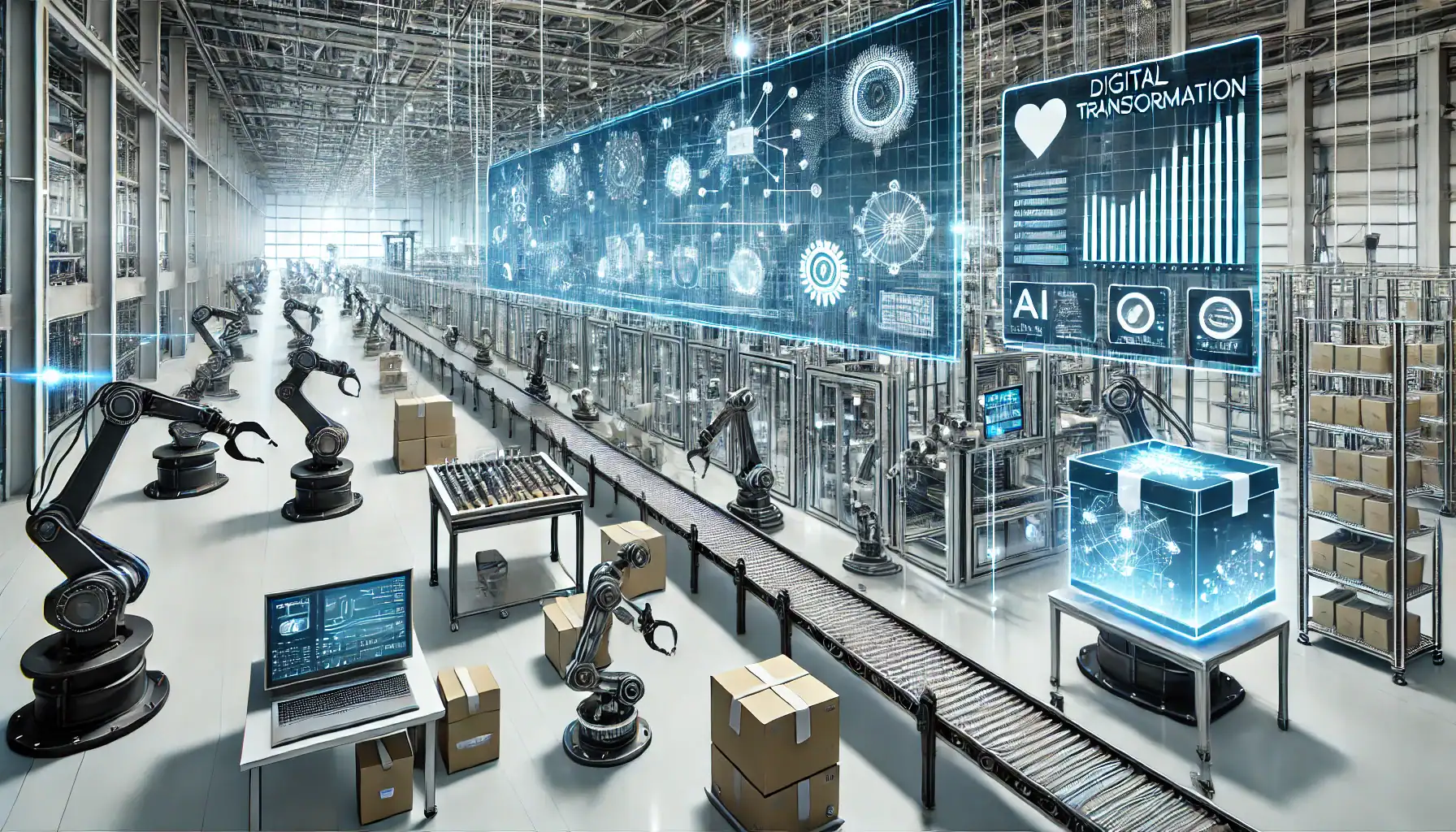
Digital transformation offers an opportunity to automate production planning and drive significant improvements. By leveraging advanced technologies such as Artificial Intelligence (AI) and Optimization, companies can unlock efficiencies, reduce costs, and align production goals with overall business strategies.
6 Must-Have Capabilities for Automating CPG Production Planning
Here are some must-have capabilities that any production planning automation solution should include.
1. End-to-end Synchronization for Seamless Production Planning
Production planning spans multiple layers, from rough-cut capacity planning (RCCP) to master production scheduling (MPS) and finite scheduling. To achieve seamless operations, automation tools must align these layers, ensuring that high-level capacity plans translate into actionable schedules at the shop floor level. This includes:
- RCCP: Balancing demand and capacity at a macro level to preempt supply constraints. For example, prebuilding inventory during idle months to support new product launches.
- MPS: Breaking down RCCP outputs into SKU-level schedules to minimize overstock and meet delivery deadlines.
- Finite Scheduling: Detailed sequencing of production orders, incorporating real-time constraints like labor availability, machine capacity, and raw material delays.
| Planning layer | What it does | Example |
|---|---|---|
| Rough-cut capacity planning (RCCP) | Balances demand and capacity at a macro level to preempt supply constraints | Prebuilding inventory in idle months to support a new product launch |
| Master production scheduling (MPS) | Breaks RCCP outputs into SKU-level schedules | Minimizing overstock while meeting delivery deadlines |
| Finite scheduling | Sequences production orders in detail | Accounting for labor availability, machine capacity and raw material delays |
2. Real-time data Integration and Feedback Loops
Automated planning solutions must integrate data across enterprise resource planning (ERP), manufacturing execution systems (MES), and supply chain planning platforms. Real-time updates enable planners to respond quickly to changes, such as unplanned machine downtime or material shortages.
Key features include:
- Bidirectional data flows to update schedules dynamically.
- Integration with IoT devices for real-time monitoring of machine and labor performance.
- Visibility into work-in-progress (WIP) inventories for efficient resource allocation.
3. Leveraging AI for Prescriptive and Predictive Analytics
Modern production planning tools leverage AI and machine learning to go beyond static scheduling. Prescriptive analytics provide optimization recommendations, while predictive capabilities forecast disruptions and suggest proactive measures. Use cases include:
- Simulating “what-if” scenarios to prepare for demand surges or supply disruptions.
- Reducing changeover times by optimizing production sequences based on historical data.
- Predicting maintenance needs to align with production schedules.
4. Interactive Visualization Tools for Better Planning
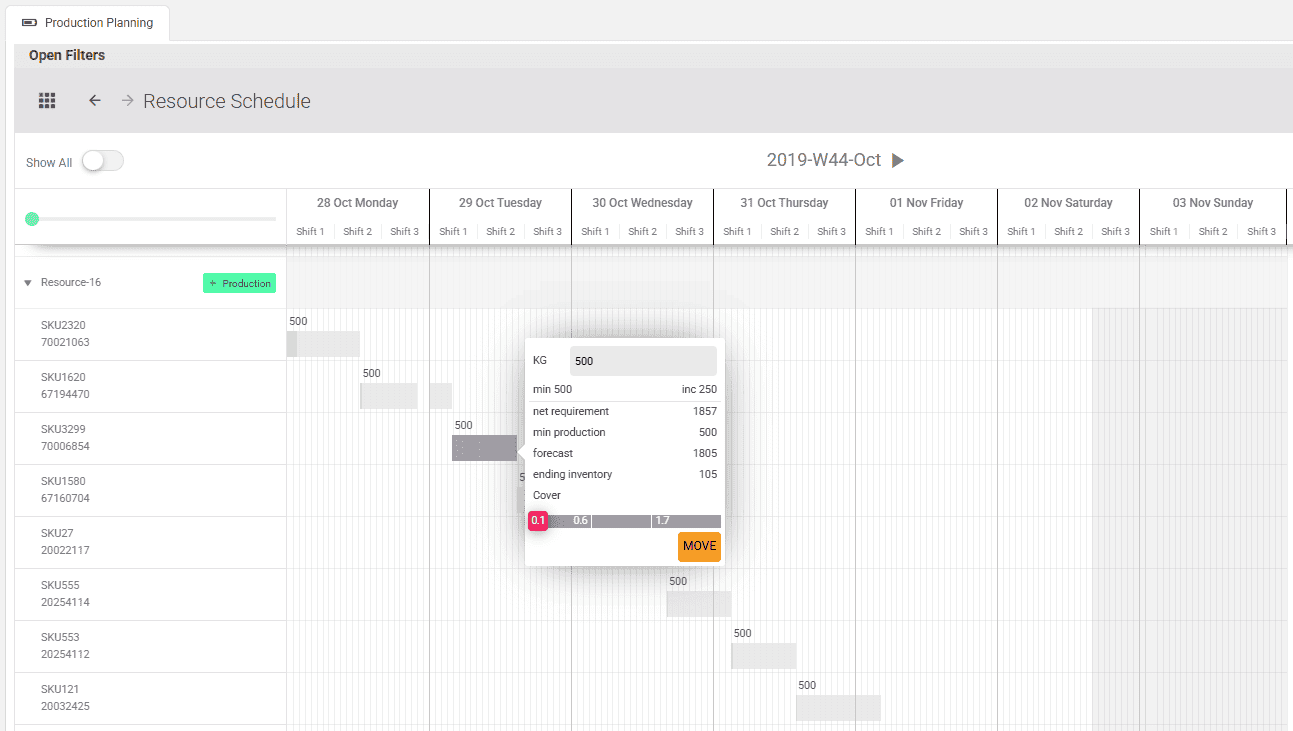
An interactive Gantt chart is a cornerstone of effective planning automation. This feature enables planners to visualize schedules, modify them using drag-and-drop functionality, and explore scenarios intuitively. Additionally, visual dashboards displaying KPIs—like yield, OEE, and changeover rates—empower leaders to make data-driven decisions.
5. Flexible Solutions for Industry-Specific Needs
Manufacturing environments differ widely, and planning solutions must be adaptable. Industry-specific capabilities, such as tank/silo sequencing for process industries or campaign planning for batch manufacturers, can drive meaningful outcomes. The system should also support low-code configuration to reflect operational realities like plant layout and labor shifts.
6. Enabling Continuous Improvement in Production Planning
Automated production planning should not just focus on execution but also foster ongoing improvements. By monitoring User Acceptance Rates of the scheduling recommendations provided by the planning system and capturing reason codes for making manual adjustments, organizations can identify bottlenecks, streamline workflows, continuously improve the quality of decisions, and advance the level of automation.
Case Study: Unilever Eliminates Silos with Production Planning & Scheduling
Unilever aimed to optimize production planning across multiple locations with similar capabilities. Implementing Solvoyo’s platform allowed for synchronized planning, integrating Distribution Requirements Planning (DRP), Master Production Scheduling (MPS), and Production Planning and Detailed Scheduling (PPDS).
This holistic approach reduced dependence on supply planners and ensured alignment between planning and execution, achieving over 95% user acceptance and over 85% output reliability rates.
Transforming CPG Production Planning with Automation
As manufacturing organizations face increasing complexity and demand variability, the need for robust production planning automation has never been greater. By implementing solutions with these must-have capabilities, Supply Chain Executives and digital transformation leaders can achieve better alignment between planning and execution, optimize resource utilization, and improve overall productivity.
The journey to automation begins with selecting the right tools and aligning them with your strategic goals. Start small, measure your outcomes, and scale as you gain confidence in the technology’s ability to deliver results.
Ready to transform your production planning? Discover Solvoyo’s AI-powered Production Planning Solution.

Frequently Asked Questions
Solvoyo’s supply chain decision automation plans and schedules production on one model, from rough-cut capacity to detailed line sequencing. Demand signals from demand planning flow into production sequencing, material requirements and inventory targets. Solvoyo tracks actions from rough-cut planning to detailed scheduling and keeps improving its AI/ML algorithms. At Unilever, synchronized production planning reached over 95% user acceptance.
Balance capacity, materials and cost for all lines in a single optimization run, so the plan is feasible before it reaches the floor. Rough-cut capacity planning should use available lines, active shifts and changeover times. Finite scheduling then sequences orders against labor availability, machine capacity and material delays, and sequence optimization based on historical data reduces changeover times.
In CPG production planning, automation means the system builds the plan and the schedule, and planners review and approve them. Solvoyo balances capacity, materials and cost in one optimization run, sends authorized schedules back to ERP systems such as SAP, and reports 95%+ decision automation. Planners can still override a plan without breaking the automation.